Swarming of UAVs and Rovers for Precision Pest Control and Harvesting
Crop inspection and pesticide spraying have traditionally been labor-intensive, leading to inaccuracies and inefficiencies. This not only harms the crops but also results in water and soil pollution, impacting crop quality and human health. To address these challenges, we propose a groundbreaking solution utilizing precision agriculture techniques. Applying precision agriculture through a single large robot is impractical due to its lack of scalability, high cost, and negative environmental impact. To overcome these limitations, we turn to the concept of Swarm Intelligence – a team of small-sized, inexpensive UAVs working together collaboratively to achieve a specific task.
Algorithm for Swarming of UAVs for disease detection and precision pest control
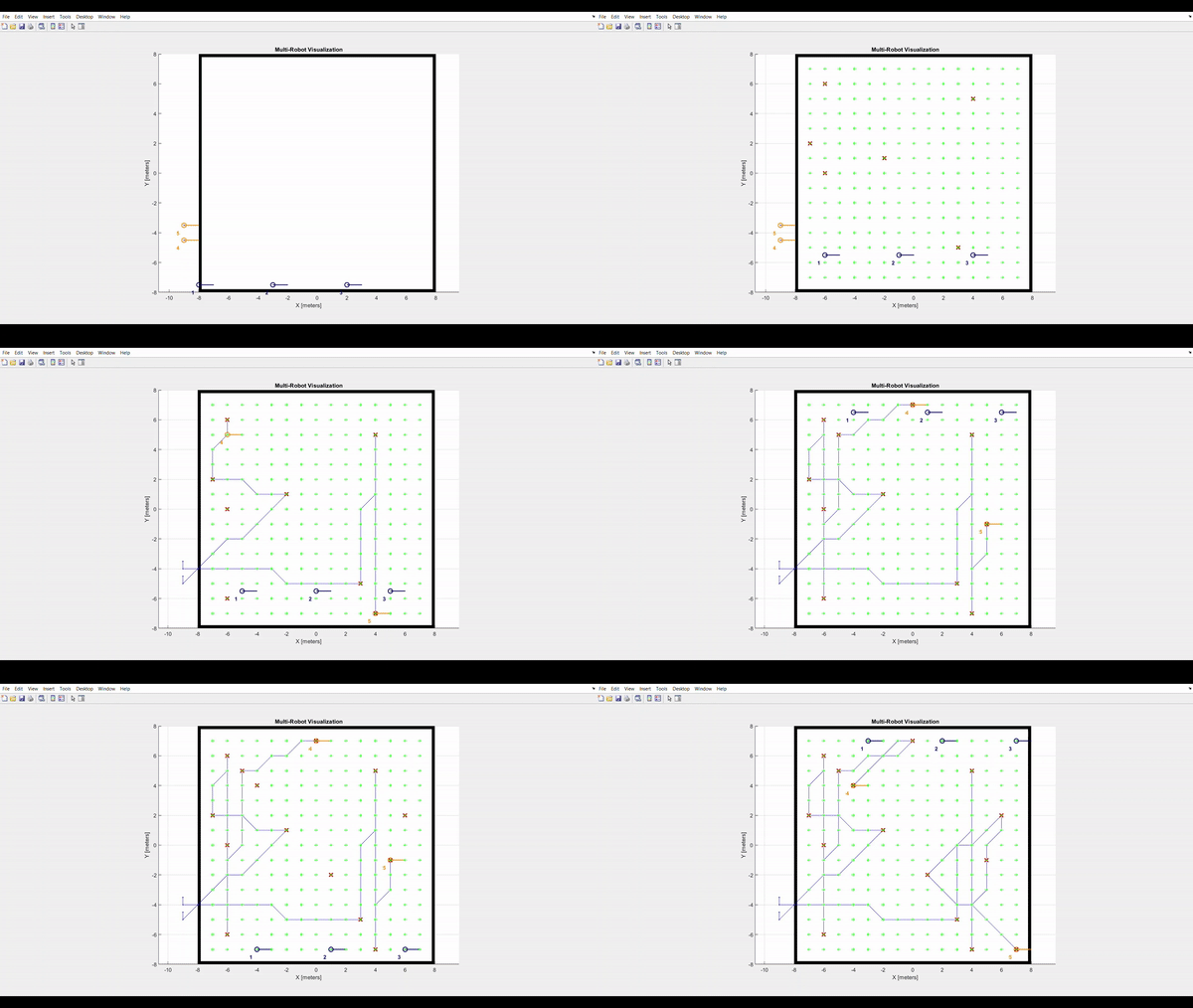
This algorithm emulates the swarm behavior found in social creatures like honey bees. By categorizing the UAVs into employed and onlooker bees, we enable them to efficiently scan the cauliflower field for disease and pests. The employed bees identify infected plants and pass on the information to the onlooker bees, who then proceed to spray precision pesticides, thereby optimizing the entire process.
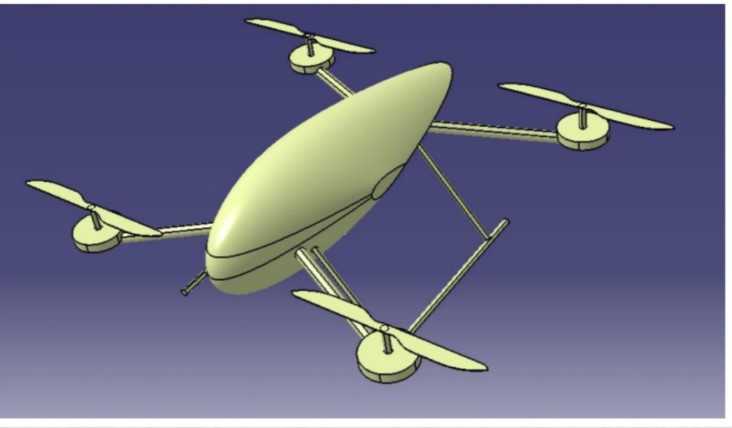
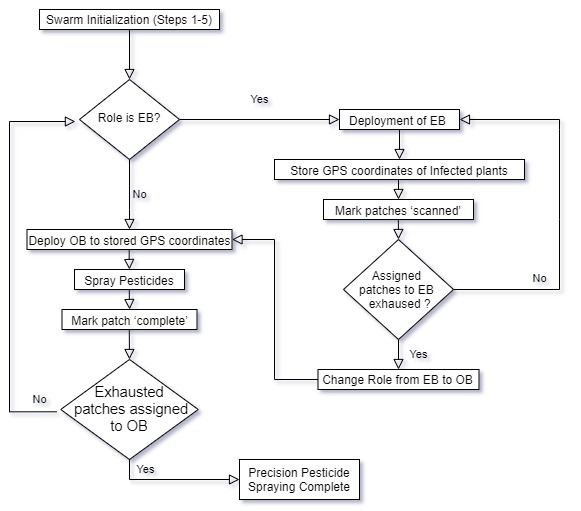
This innovative algorithm ensures real-time collaboration between the employed and onlooker bees, eliminating the need for them to return to a central workstation. As a result, tasks are completed faster and more effectively. Additionally, the algorithm avoids the random selection of starting locations, ensuring no portions of land are missed, and eliminating the requirement for scout bees.
By leveraging swarm intelligence and advanced geospatial techniques, this solution delivers scalability, accuracy, flexibility, and environmental friendliness. It not only revolutionizes the way we approach precision agriculture but also holds the potential to significantly improve crop health, reduce pesticide usage, and enhance overall agricultural sustainability. Our improved version of the Artificial Bee Algorithm empowers the UAV swarm to change roles based on environmental conditions and other agents' behavior, further optimizing the task allocation and collaborative manipulation processes. This results in a more efficient and easy-to-maintain system.
Algorithm for Swarming Autonomous Robots for Cauliflower Harvesting
.gif)
Cauliflower harvesting has long been a laborious task, demanding significant manual effort. Currently, giant machines assist in the process, but this approach proves non-scalable, expensive, and environmentally unfriendly. These large machines not only pose transportation challenges but also damage the soil structure, requiring additional manual intervention during the harvest. To address these issues, we present an innovative solution: a swarm of small-sized, inexpensive robots working collaboratively to revolutionize the cauliflower harvesting process.
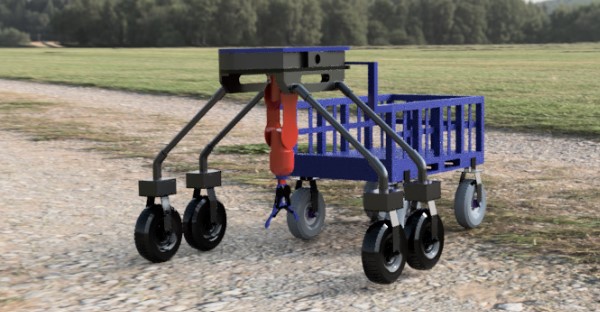
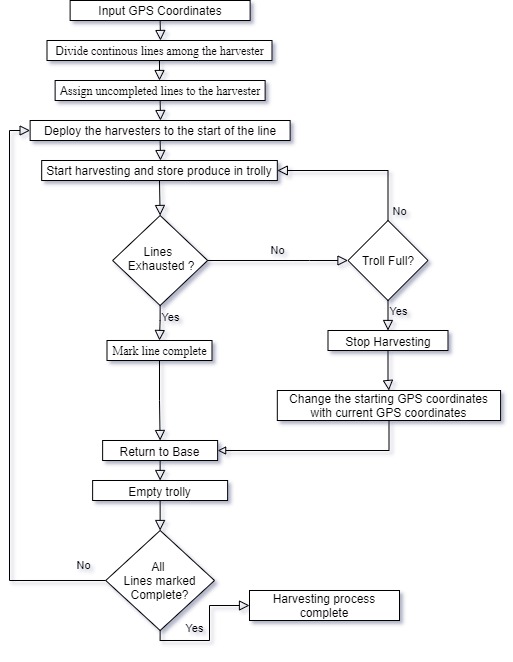
This solution leverages the power of swarm intelligence, where the collective behavior of social creatures inspires a decentralized control system. The robots autonomously interact with each other and their environment to achieve the desired outcome. This swarming effect enables faster, accurate, and more flexible harvesting, all while being environmentally friendly.
At the core of our solution lies a meticulously designed swarm algorithm, specifically tailored for cauliflower harvesting. Inspired by the behavior of social creatures, our algorithm ensures efficient task division and self-organization to adapt to changing conditions without requiring centralized supervision.
The harvester returns to the base, empties the trolly, and prepares for the next assignment. Repeat these steps until all lines are marked complete. By harnessing the power of swarm robotics, our algorithm optimizes the cauliflower harvesting process. It ensures that the robots work harmoniously, maximizing efficiency and minimizing manual intervention. The decentralized nature of the swarm guarantees scalability and adaptability, making it a highly effective and sustainable solution for harvesting cauliflower.